
Things to Do in Australia in February
February weather, activities, events & insider tips
Shoulder Season · Good Value
February Weather in Australia
Temperature, rainfall and humidity at a glance
80°F (26°C)
High Temp
67°F (19°C)
Low Temp
5.2 inches (132 mm)
Rainfall
70%
Humidity
⚠ Tropical cyclone season is active across northern Australia in February, affecting Queensland north of Rockhampton, the Northern Territory coast, and the Kimberley region of Western Australia. Cyclones can develop rapidly, bringing destructive winds, flooding rain, and multi-day disruptions to transport and accommodation. Monitor the Bureau of Meteorology's tropical cyclone outlook if travelling north of the Tropic of Capricorn.
⚠ Extreme heat events in southern cities, Melbourne and Adelaide, can produce consecutive days above 40°C (104°F). These heatwaves carry genuine health risk, for travellers not acclimatised to Australian summer heat. Plan outdoor activity for early morning or late evening, carry water constantly, and know where air-conditioned public spaces are located.
⚠ Box jellyfish and Irukandji are present in tropical coastal waters north of roughly Bundaberg in Queensland and Exmouth in Western Australia. Stings can be life-threatening. Swim only at beaches with stinger nets, wear protective stinger suits, and heed all local signage. This hazard is real and not overstated.
⚠ UV radiation reaches 'extreme' levels across most of Australia in February. Unprotected skin can burn in under twenty minutes at midday. Wear SPF 50+ sunscreen, a wide-brimmed hat, and UV-protective sunglasses at all times outdoors, even on overcast days when UV penetrates cloud cover.
Is February Right for You?
Weigh the advantages and considerations before booking
Advantages
- + February turns the southern coast loose. Ocean temps hit 23-24°C inside Sydney Harbour and the Tasman Sea finally sheds its winter bite. Daylight lasts past 8pm in both Sydney and Melbourne, so you can beach a kayak at sunset and still stroll home in gold light. Beaches south of the Tropic of Capricorn, from Bondi to Victoria's Mornington Peninsula, peak for swimming. The rock pools along Sydney's Coogee-to-Bondi walk trap warm, gin-clear water that throws late sun like glass.
- + School holidays are done by mid-February. Burleigh Heads on the Gold Coast, shoulder-to-shoulder in January, breathes again in week three. Rooms that sold out in December now take same-week bookings. Sydney-to-Hobart or Sydney-to-Perth flights drop once the holiday premium dies. Freycinet National Park in Tasmania flips from permit-capped to walk-in friendly.
- + February owns Australia's arts calendar. Adelaide Fringe, the Southern Hemisphere's biggest open-access festival, kicks off mid-month and colonises the city centre, Torrens parklands, and Rundle Street laneways. Perth's Fringe World lingers into early February. Sydney's Mardi Gras season ignites across Darlinghurst and Surry Hills. If you crave comedy, live art, or late-night cabaret, February is the month.
- + Wildlife ignores the tourist brochures. Manta rays stack along Ningaloo Reef off Western Australia's Coral Coast through February, and warm currents pull whale sharks within snorkel reach at Exmouth. In South Australia, Coorong pelican colonies feed chicks and the Murray Mouth birdlife condenses into one noisy rookery. Even Sydney Harbour surprises: a penguin colony on Manly's foreshore shows itself from the ferry if you know the angle.
Considerations
- − Tropical North Queensland, from Cairns through the Daintree to Cape Tribulation, sits in cyclone crosshairs during February. The Bureau of Meteorology posts Coral Sea watches most years. When one hits, everything locks down: reef boats stay tied, the Skyrail to Kuranda halts, Cairns-Port Douglas roads flood, and you watch horizontal rain from your room. Without a direct hit, the wet still dumps 300-400mm on Cairns and humidity hugs 80% round the clock. If the Reef is your reason for coming, February is a roll of the dice.
- − Southern cities can cook. Melbourne spikes to 40-44°C when the northerly desert wind arrives; Flinders Street asphalt throws heat back at your knees. Adelaide runs hotter and longer. Botanic Gardens empty, Blue Mountains tracks close, and the only sane play is air-con, cinema, or the coast until the southerly buster slams through.
- − Box jellyfish and thumbnail-sized Irukandji patrol north of Bundaberg in Queensland and Exmouth in Western Australia all February. Stings hurt. Some kill. Unnetted beaches become no-go zones. Stinger nets at Townsville's Strand and Palm Cove near Cairns cut the odds, not erase them. If you dream of leaping straight into warm turquoise water, head south this month.
Best Activities in February
Top things to do during your visit
Sydney Harbour Kayaking and Coastal Walks
Sydney Harbour at dawn in February is liquid gold. Before 9am the surface is glass, the sandstone at Bradleys Head glows amber, and ferries have not yet shredded the mirror. Paddle from a north-shore ramp toward Goat Island, drift past the rusted quarantine jetty, watch the Opera House tiles shift from white to pale gold as the sun climbs. Water sits at 23°C, so a capsize feels like a high-five. After the kayak, the Bondi-to-Coogee cliff walk delivers its best at dusk, when an offshore breeze lifts and the Tamarama pools fill with locals cooling off. Book kayak tours at least a week ahead. Mornings sell out. By afternoon the nor-easter chops the harbour and paddling becomes a chore. Current options sit in the booking section below.
Booking Tip: Morning tours sell first. Reserve seven to ten days out. Pick operators who launch from quiet north-shore ramps, not Circular Quay. Ferry wash near the terminals rattles novices. Groups of four or fewer snag better guide time. Check the booking widget below for current guided kayak tours.
Tasmania Wilderness Hiking
February is Tasmania's secret season. Locals know it. Visitors miss it. Cradle Mountain's Overland Track, the Wineglass Bay circuit in Freycinet National Park, and the quiet Tarkine rainforest trails all hit their stride now. Daylight stretches past fifteen hours. Rainfall is at its yearly low. Cradle's high ground hovers at 15-20°C (59-68°F), cool enough to march uphill, warm enough to wade rivers without ice burn. Southern Ocean air scours every trace of haze. Dolerite spires at Cape Raoul blaze like polished steel under arctic light. Above 900 m (2,950 ft) the alpine wildflowers still bloom, splashing Lake St Clair's buttongrass in white and pale yellow. Finish walking and you're under two hours from Hobart's Salamanca waterfront where fishing boats unload and dockside stalls grill scallops that smell of salt and butter.
Booking Tip: Permits for the Overland Track sell out months ahead for February. Book early. Freycinet day hikes can be snapped up through the widget below with only a few days' notice. Pick guides who carry gear and hold wilderness first-aid tickets. Pack every layer you own. Tasmanian weather flips fast. Sun can swing to sleet in twenty minutes.
Margaret River Coastal and Wildlife Exploration
Margaret River lives by a Mediterranean clock, and February hits the sweet spot. The coast from Dunsborough to Augusta sits at 28-30°C (82-86°F), dry, and almost empty after the Christmas rush. Raw limestone cliffs drop to sea caves at Cape Leeuwin where two oceans slam together in clashing colours. Inland, 60 m (197 ft) karri giants shade trails that reek of hot eucalyptus. Blue whales still cruise Geographe Bay. Low tide exposes anemone pools and octopus lairs along the rocks. Vineyards hustle toward harvest; Caves Road cellar doors pour wines beside cheese and charcuterie built from neighbouring dairy farms.
Booking Tip: Eco tours linking coast, forest, and wildlife leave from Busselton or Dunsborough. Reserve three to five days ahead in February. Demand is real. Eight guests or fewer gives you the best chance of seeing critters. The region sprawls. Allow two full days if you're driving yourself. Current Margaret River tours sit in the booking section below.
Gold Coast Sunset Sailing and Surf Experiences
February on the Gold Coast means 26-27°C (79-81°F) Coral Sea water, a southeasterly swell pumping Snapper Rocks and Burleigh Heads, and late storms that light up Broadbeach restaurant decks while you nurse a cold beer. Storms rarely outstay forty-five minutes. They swap sticky heat for comfortable air. Sunset sails out of Main Beach marina slide past the Seaway toward South Stradbroke Island, catching copper and violet clouds above flat, ozone scented water. Breeze dies. Dolphins sometimes patrol the sand pumping jetty. Surf crowds thin after mid-month; school goes back. Beginners head to Coolangatta or Currumbin for gentle rollers. Kirra's hollow barrels stay with the locals.
Booking Tip: Sunset sailing cruises need three to five days' advance booking, more on weekends. Surf lessons run daily. Midweek slots can be booked same day, weekend mornings vanish fast. Pick sailing packages that include food and drinks. Buying on board costs more. Check the widget below for current Gold Coast water activities.
Blue Mountains Day Trips from Sydney
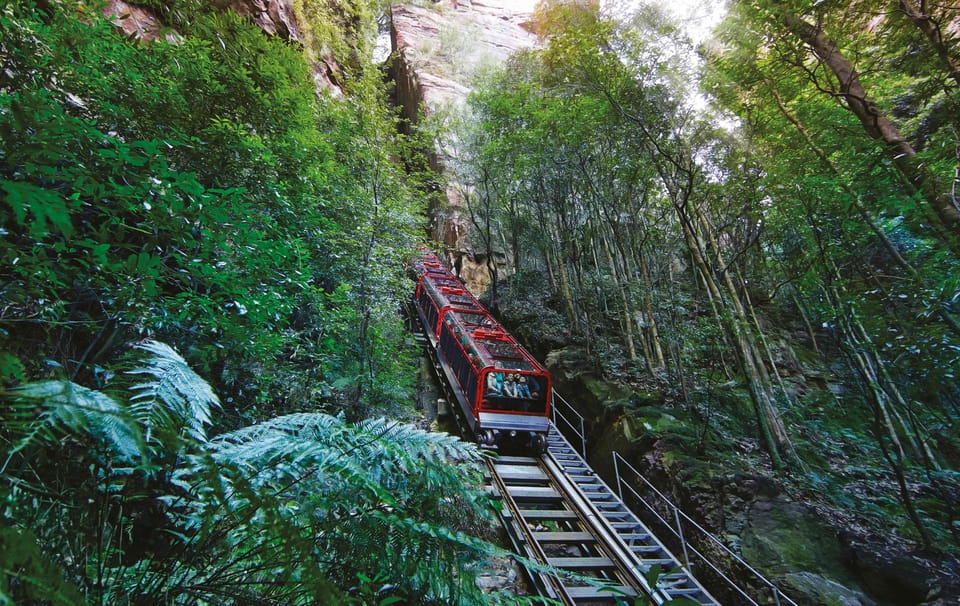
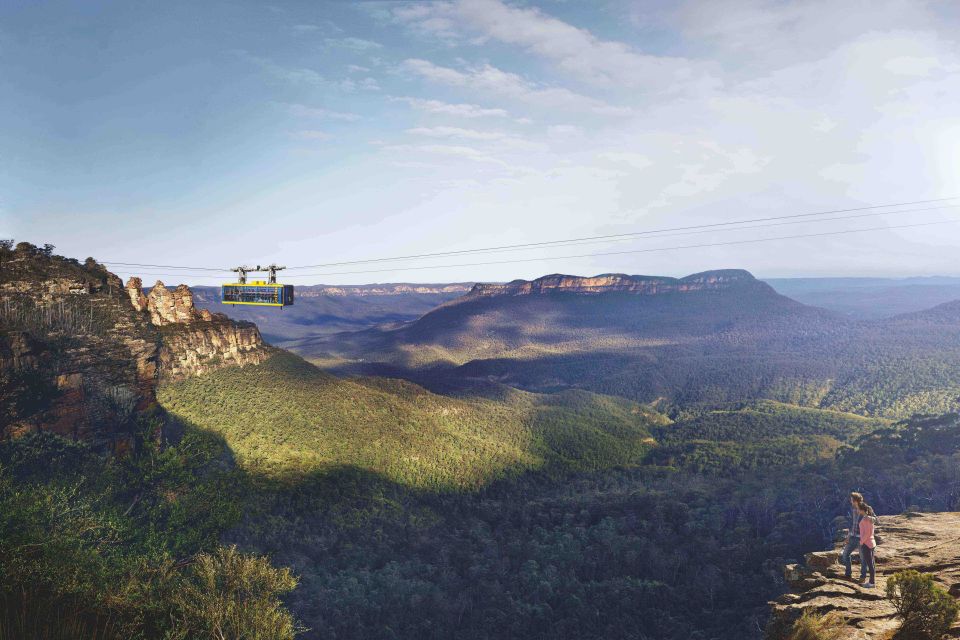
The Blue Mountains rise 90 km (56 miles) west of Sydney and offer instant relief when coastal humidity suffocates. Katoomba sits near 1,000 m (3,280 ft), shaving five to eight degrees off the basin's heat. Summer sun vaporises eucalyptus oil, painting the Jamison Valley below Echo Point in shifting blue-grey layers. February thunderstorms charge Wentworth Falls and Govetts Leap to full power. Water crashes four hundred metres onto sandstone and the echo ricochets between cliffs. The Grand Canyon track near Blackheath threads narrow Permian slots cloaked in moss and tree ferns. Light filters green and the air drops ten degrees. The trail is slick after rain. Wear boots, not sandals. Leura's galleries and cafes line up along the ridge for lunch, and the mountain breeze feels like air conditioning after Sydney's suburbs.
Booking Tip: Day tours from Sydney typically depart early morning and return by evening, so book at least a few days out for February weekends. Self-driving gives more flexibility but parking at Echo Point fills by 10am on weekends, so arrive early or use the hop-on shuttle services. If you want to hike the Grand Canyon track, choose operators whose itinerary specifically includes it rather than the standard lookout-only tours. See current Blue Mountains day trips in the booking section below.
Coorong National Park Kayaking and Wildlife
The Coorong stretches 130 km (81 miles) along South Australia's coast southeast of Adelaide, a narrow lagoon system separated from the Southern Ocean by the sand dunes of Younghusband Peninsula. In February, the water is warm enough for comfortable paddling, and the birdlife reaches a peak that birders travel internationally to witness: Australian pelicans in breeding colonies numbering in the thousands, black swans, spoonbills, and migratory waders that have arrived from as far as Siberia. The landscape is flat, spare, and luminous, with the kind of wide-sky light that makes the water surface mirror the clouds so precisely that the horizon line disappears. The air smells of salt crust, drying seagrass, and the faintly sweet decay of the samphire flats along the lagoon edges. A full-day kayak covers the upper lagoon system, weaving through channels narrow enough that reeds brush both sides of the boat, opening suddenly into broad calm water where pelicans fish in coordinated groups, each bird tipping forward in synchronised dives. It is quiet in a way that urban Australia does not prepare you for. The wind typically drops in the morning and picks up after noon, so early starts make for easier paddling.
Booking Tip: Full-day guided kayak tours need booking at least a week ahead in February, as group sizes are kept small to minimise wildlife disturbance. Bring a hat, sunscreen, and water, as shade on the lagoon is nonexistent. Some operators provide waterproof bags for cameras and phones. See current Coorong tours in the booking section below.
Where to Stay in Australia in February
Hand-picked hotels across price tiers for February travellers.

Packing Checklist
Bookmark this page — your progress is saved between visits
Need the full list with shopping links?
Climate-specific gear, brand recommendations, and what to leave at home.
View Australia Packing List →Essential Tips
Insider knowledge and common pitfalls to avoid
Insider Knowledge
The single most useful thing to know about February in Australia is the school-holiday calendar. Every state's summer holidays end between late January and mid-February. The difference in crowd density is dramatic. The second and third weeks of February are the sweet spot. The weather is still peak summer, the ocean is still warm. But the family crowds have evaporated from beaches, national parks, and popular coastal drives. Domestic flight prices drop noticeably, and accommodation that was booked solid in January suddenly has midweek openings.
Melbourne's summer heat events follow a pattern that locals read like clockwork. A run of days above 38°C (100°F) builds from hot northerly winds blowing off the interior. The spell breaks abruptly with a 'Southerly Buster,' a cold front that drops the temperature by fifteen degrees in under an hour and brings brief, violent rain. Locals track the forecast for the cool change and plan their day around it. Indoor museums and galleries until the change hits, then outdoor activity in the washed-clean evening air. The NGV International on St Kilda Road and ACMI at Federation Square are the two best air-conditioned retreats during a heatwave.
Australia's coffee culture is serious, and ordering well matters. A 'flat white,' which Australia claims to have invented (New Zealand disagrees, naturally), is the default order. It arrives in a ceramic cup, not a takeaway cup, unless you specify. Asking for a large drip coffee in the American style will get you a confused barista in most independent cafes. Melbourne's laneways, Degraves Street, Centre Place, and Hardware Lane, are where the coffee reputation was built. The quality in a random laneway cafe there still tends to surpass what you will find in most other cities worldwide. Tip is not expected but rounding up is appreciated.
If you are driving, distances between Australian cities are continental, and first-time visitors routinely underestimate them. Sydney to Melbourne is 877 km (545 miles), roughly nine hours of driving. Sydney to Brisbane is 920 km (572 miles). Perth is over 4,000 km (2,485 miles) from Sydney, a four-hour flight. Regional driving in February also carries bushfire risk. Check the Rural Fire Service app or equivalent state app for fire danger ratings and road closures before heading into national parks or rural areas. Fatigue on straight inland highways is a genuine hazard. Roadside rest stops every 100 km (62 miles) exist for a reason.
Avoid These Mistakes
Planning a Great Barrier Reef trip for February without understanding that this is peak cyclone and wet season on the tropical Queensland coast is a rookie error. Cairns and the Whitsundays receive their heaviest rainfall in January and February. Visibility on the reef drops significantly from sediment runoff, and reef boat operators cancel trips regularly due to weather. The reef is not going anywhere. If the reef is your primary reason for visiting, March through November gives you dramatically better conditions, clearer water, and more reliable boat schedules.
Treating the UV index as a suggestion rather than a medical reality is a fast track to misery. Australia sits under the thinnest section of the ozone layer in the Southern Hemisphere. February UV levels routinely reach 'extreme' on the index scale. Visitors from the Northern Hemisphere are vulnerable because their skin has not seen strong sun in months. A severe sunburn in Australian summer can hospitalise you, and it can happen in under thirty minutes of unprotected midday exposure. Australians grow up with the 'Slip, Slop, Slap' campaign drilled into them. Visitors need to take it equally seriously.
Booking accommodation only in Sydney and assuming you can see 'Australia' from there. Sydney is a magnificent harbour city. But it is not representative of the country any more than New York represents the United States. Visitors who spend their entire trip in Sydney miss the dramatic contrast between regions that makes Australia worth the long-haul flight: the clean wilderness light of Tasmania, the Mediterranean warmth of Margaret River, the reef systems of Ningaloo, the red earth of the interior. Budget at least two distinct regions into any trip longer than five days.
Ready to plan your trip to Australia?
Now that you've got the research covered, here's where to go next.
Book Experiences in Australia
Top-rated things to do in Australia this February



Explore More Activities in Australia
Didn't see anything interesting yet?
Browse Viator's full catalog of tours, day trips, food experiences, and private guides in Australia.
See All Australia Tours on Viator