
Things to Do in Australia in May
May weather, activities, events & insider tips
Low Season · Budget Friendly
May Weather in Australia
Temperature, rainfall and humidity at a glance
69°F (20°C)
High Temp
54°F (12°C)
Low Temp
4.0 inches (102 mm)
Rainfall
70%
Humidity
⚠ Northern Australia's dry season is starting, not settled, in early May. Flash flooding on remote dirt roads in the Top End and Far North Queensland remains possible in the first two weeks. Always check road conditions through local authorities before driving unsealed routes in Kakadu or Cape York.
⚠ UV index hits 8 or higher across northern and central Australia despite cooler air. Sun damage accumulates faster than higher-latitude visitors expect. Sunburn tops traveller health complaints in Australian emergency departments year-round, and May's milder air masks the radiation intensity.
Is May Right for You?
Weigh the advantages and considerations before booking
Advantages
- + The Top End dry season kicks in across northern Australia in May. Kakadu National Park's waterfalls still thunder from wet-season runoff yet humidity has dropped from suffocating to merely warm. Crocodiles are easier to spot in shrinking billabongs. Roads that were impassable two months ago are finally open. This is the narrow window when the tropical north is at its absolute best. Wait until August and those waterfalls are trickles.
- + The Great Barrier Reef enters its sweet spot in May. Irukandji and box jellyfish season is winding down. Underwater visibility climbs to 15-20 metres (50-65 feet) as wet-season sediment clears. Water temperatures still hover around 24-25°C (75-77°F). Warm enough for extended dives without a thick wetsuit. The reef boats are noticeably less crowded than they were during the Easter holidays.
- + The Red Centre around Uluru and Kata Tjuta hits ideal conditions. Daytime temperatures around 22°C (72°F) with cool nights dropping to 5-8°C (41-46°F). No flies to speak of compared to the swarms of summer. A quality of light in the low autumn sun turns the rock formations copper and rust. The harsh summer glare washes this out. Sunrise walks are cold. This thins the crowds.
- + Shoulder-season pricing lands across most of Australia outside of school holiday windows. Accommodation in Sydney, Melbourne, and the Gold Coast drops meaningfully from summer peaks. Domestic flights between capital cities tend to be noticeably cheaper than December through February. The exception is tropical Queensland and the Northern Territory. Prices there are climbing as the dry season begins. Book those regions early.
Considerations
- − Southern Australia is heading into winter. Melbourne in May averages highs around 15°C (59°F) with a biting wind off Port Phillip Bay. The sun sets before 5:30pm. Sydney is milder but still cool enough that beach swimming becomes a cold-water commitment rather than a casual afternoon activity. If you came for the classic Australian beach holiday, the southern capitals will disappoint.
- − Australia's sheer scale makes May planning complicated. The country spans roughly 3,700 km (2,300 miles) from tropical Darwin to temperate Hobart. May weather in those two cities has almost nothing in common. Darwin is 31°C (88°F) and dry. Hobart is 12°C (54°F) and grey. You cannot pack for one Australia in May. You are packing for whichever slice you are visiting. Getting the wrong wardrobe will make you miserable.
- − Whale watching along the east coast is just getting started in May. Sightings are less reliable than the peak months of July through October. Operators in Hervey Bay and Eden are running trips. The main humpback migration is still building momentum. Some boats report blank days. If whales are the centrepiece of your trip, June or later is the safer bet.
Best Activities in May
Top things to do during your visit
Kakadu and Top End Wetland Safaris
May marks the first full month of the dry season in Australia's tropical north. Kakadu National Park transforms from a largely inaccessible wet-season marshland into one of the most spectacular wildlife corridors on the continent. The floodplains of the Yellow Water Billabong are contracting. This concentrates saltwater crocodiles, jabiru storks, and thousands of magpie geese into viewable clusters along the remaining waterways. The air still carries the green, vegetal scent of recent rains. The oppressive humidity has broken. Mornings start around 20°C (68°F) with a clarity that makes the escarpment country glow ochre and amber. Jim Jim Falls and Twin Falls are still flowing hard from wet-season reserves. You will not see this by July. The mosquitoes are calming down but have not vanished entirely. Long sleeves at dusk remain non-negotiable. Four-wheel-drive tracks to more remote sites are reopening week by week through May. Check conditions before committing to a route. Book wildlife cruise operators at least two weeks ahead. The best dawn departures fill quickly once word spreads that the dry season has arrived.
Booking Tip: Book wetland cruises and guided 4WD tours a minimum of two weeks ahead through licensed operators based in Jabiru or Darwin. Dawn departures offer the best wildlife viewing and cooler temperatures. Multi-day safari packages that combine Yellow Water, Ubirr rock art, and Jim Jim Falls are the most efficient way to cover the park's scale. See current options in the booking section below.
Great Barrier Reef Diving and Snorkeling
May on the Great Barrier Reef feels like the ocean exhaling after wet season. The visibility sharpens to 15-20 metres (50-65 feet) as runoff sediment settles. Coral spawning remnants have cleared. The dangerous stinger season that closes netted swimming areas along the Queensland coast is fading. Water temperature sits around 24-25°C (75-77°F). A 3mm shortie wetsuit is enough for most people. If you run cold, a full suit keeps you comfortable on a second or third dive. The outer reef platforms departing from Cairns and Port Douglas carry noticeably fewer passengers than they did in January. This means less fin-churned sand, shorter queues for the introductory dive briefings, and more time in the water per person. Manta rays are frequently spotted at sites around Lady Elliot Island through May. They are drawn by plankton blooms in the cooling water. The trade-off is that some smaller operators reduce their schedules as tourist numbers dip. The cheapest budget boats may run only three or four days a week rather than daily.
Booking Tip: Book reef day trips seven to ten days ahead through operators departing Cairns, Port Douglas, or Airlie Beach. For outer reef sites, where the coral is healthiest and vis is strongest, look for boats that limit passenger numbers and spend at least five hours at the reef, not two. Multi-day liveaboard trips to the Ribbon Reefs or Cod Hole require three to four weeks advance booking even in shoulder season. Browse current reef tours in the booking section below.
Uluru Sunrise and Red Centre Walking Trails
The Red Centre in May gives you the outback you dreamed of, not the furnace that greets summer visitors. Daytime highs around Uluru park at 22°C (72°F), good for the full 10.6 km (6.6 mile) base loop that rangers shut down before noon in January's 42°C (108°F) blast. The light steals the show. Low autumn sun stretches golden hour and fires the rock's iron skin through terracotta, rust, then burgundy, colours the overhead summer beam simply cannot paint. Mornings bite. Expect 3-4°C (37-39°F) at dawn. Viewing platforms stay quiet, nothing like the July and August crush. Silence gets physical. Stand at Mutitjulu Waterhole before the groups roll up and you will hear only spinifex shifting and the occasional wedge-tailed eagle riding thermals overhead. Kata Tjuta's Valley of the Winds, a 7.4 km (4.6 mile) loop among domed giants, rewards even more and carries fewer boots. Flies drop to a manageable handful, not the swarming veil that defines summer.
Booking Tip: Book guided cultural walks with Anangu-led operators at least ten days ahead. Groups stay small and May's low light lures photographers. Self-guided walks need no permit. But reach the Uluru base car park by 6:15am for sunrise. Yulara rooms sell out on weekends. Midweek stays buy flexibility. See guided tour options in the booking section below.
Sydney Harbour Kayaking and Coastal Walks
Sydney in May ditches summer crowds and sticky air. Mornings open at 13°C (55°F) and climb to a clear 19-20°C (66-68°F) by midday, prime for long hours outside. Harbour kayaking routes that buzzed with rentals and jet skis in January calm enough for you to paddle from Lavender Bay past Luna Park's grin, around sandstone headlands, into hidden coves like Store Beach in Manly where bush meets tide and kookaburras laugh from spotted gums. The Bondi to Coogee coastal walk, a 6 km (3.7 mile) clifftop ribbon along the Eastern Suburbs, hits peak condition in May. Sandstone stays dry, the ocean rolls a deep winter blue, and Bronte and Clovelly cafés have free tables. Water drops to about 20°C (68°F). Brave it if you like. Bronte's ocean pool, wave-flushed and rock-rimmed, beats open surf for most. Late May fires up Vivid Sydney. Opera House sails and harbour foreshore glow with projected art and the whole harbour flips character after dark.
Booking Tip: Harbour kayaking tours run morning and sunset. Sunset paddles in late May sync with early Vivid lights on the foreshore. Book at least a week ahead for weekends. Coastal walks cost nothing and need no guide. But start early to dodge the afternoon southerly that rips along exposed headlands. Check current Sydney experiences in the booking section below.
Blue Mountains Autumn Bushwalking
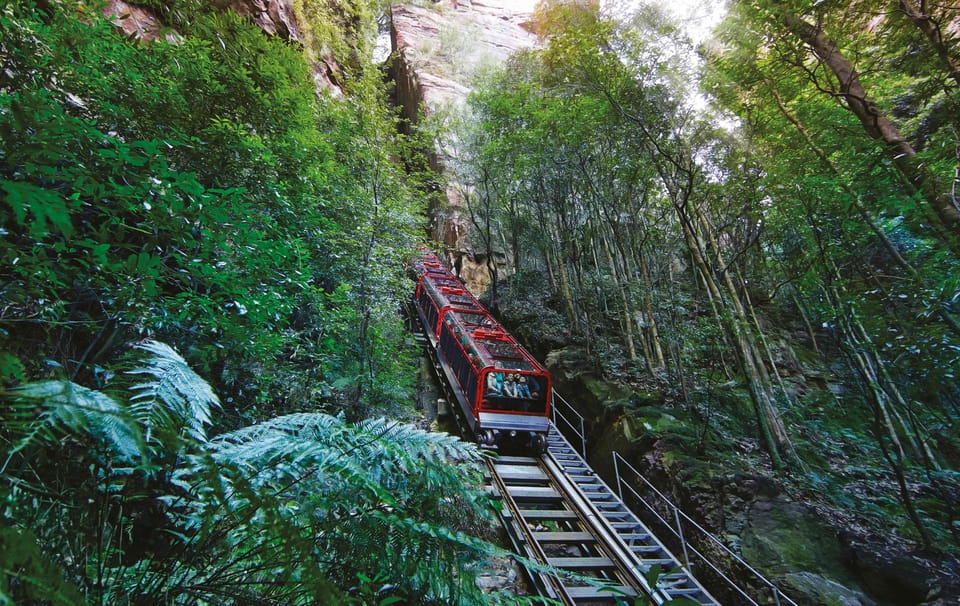
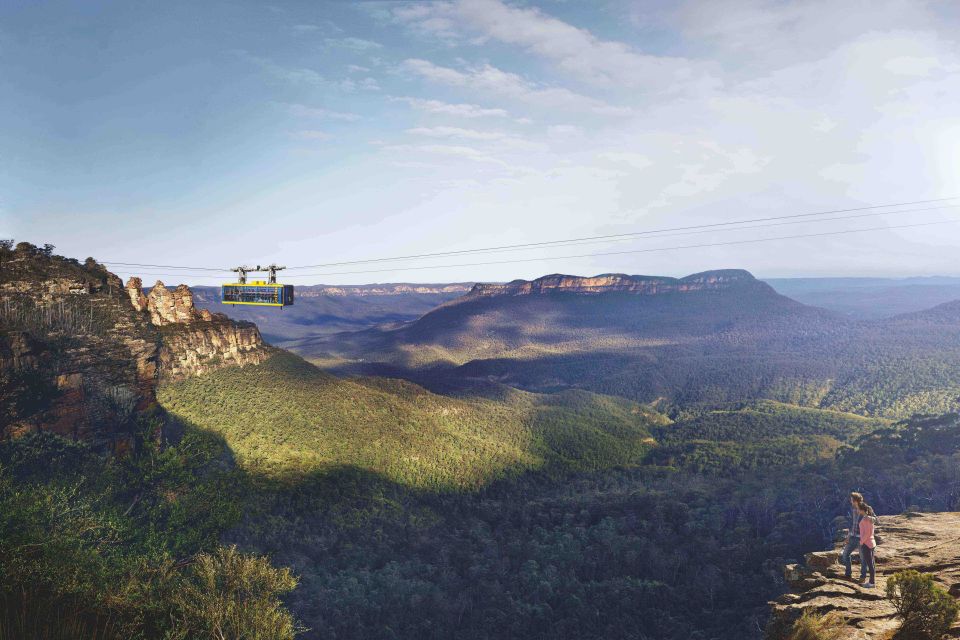
The Blue Mountains sit 90 km (56 miles) west of Sydney and deliver the closest thing Australia has to a northern-hemisphere autumn. Introduced deciduous trees lining Leura and Katoomba villages flare copper and gold through May. Drop into the Grand Canyon Track, a 6.3 km (3.9 mile) loop that plunges into a fern-filled slot canyon ten degrees cooler, scented by damp sandstone and eucalyptus oil, and you feel you have crossed into another climate. Mist drapes the Jamison Valley at dawn, giving the Three Sisters their most cinematic silhouette. It burns off by 10am and stays gone until the next sunrise. The National Pass from Conservation Hut to Wentworth Falls clings to a cliff with 300-metre (984-foot) drops. May rains keep waterfalls flowing and the bolted metal staircase dry enough to descend without white-knuckling the rail. Escarpment temps run 5-7°C (9-13°F) below Sydney, so gloves and a beanie feel good at the trailhead until the climb warms you.
Booking Tip: Most Blue Mountains walks are free and self-guided. Download the trail map for the Grand Canyon Track and National Pass before you lose signal in the valleys. Book guided Aboriginal heritage walks through Gundungurra country a week ahead. Day-trip transport from Sydney runs daily. See group tour options in the booking section below.
Margaret River Wine Country and Coastal Trails
Western Australia's Margaret River region in May has finished the frantic harvest weeks of March and April, and the winemakers have a moment to breathe. Cellar doors that were too busy for real conversation in peak season suddenly have time to walk you through a vertical tasting. They explain why the same cabernet sauvignon tastes different from the north end of the appellation versus the south, where the maritime influence off the Indian Ocean adds a saline edge to the tannins. The weather cooperates: days around 19°C (66°F) with the occasional shower, cool enough for walking between cellar doors along the farm roads. The marri trees are dropping their red-capped honky nuts and the air smells of wet karri forest and woodsmoke from the first fireplaces of the season. The Cape to Cape Track, a 135 km (84 mile) coastal trail running from Cape Naturaliste to Cape Leeuwin, is sectioned into day-walk portions. The stretch from Wilyabrup Cliffs to Moses Rock passes sea caves and granite headlands where, if you time it right in late May, you might catch the first southbound humpback whales of the season breaching offshore. The Southern Ocean swells hit hard into the limestone coastline, throwing spray across the viewing platforms at Canal Rocks. Bring a windproof layer and expect to taste salt on your lips. Regional restaurants pivot to autumn menus in May: think slow-braised lamb, truffle-season dishes from Manjimup, and marron (freshwater crayfish) grilled over coals. Worth it.
Booking Tip: Wine-tour operators run smaller groups in May than in peak season, which means more personal attention and flexibility on which cellar doors to visit. Book three to five days ahead for weekend tours. Weekday visits can often be arranged day-of. For Cape to Cape Track sections, no booking is needed but register your walk plan at the visitor centre in Dunsborough. See current Margaret River experiences in the booking section below.
Where to Stay in Australia in May
Hand-picked hotels across price tiers for May travellers.

Public Holidays in May
Dates that affect opening hours, transport and crowds
Labour Day
A public holiday in these regions only: AU-QLD.
May Day
A public holiday in these regions only: AU-NT.
Reconciliation Day
A public holiday in these regions only: AU-ACT.
Labour Day
A public holiday in these regions only: AU-QLD.
May Day
A public holiday in these regions only: AU-NT.
Reconciliation Day
A public holiday in these regions only: AU-ACT.
Packing Checklist
Bookmark this page — your progress is saved between visits
Need the full list with shopping links?
Climate-specific gear, brand recommendations, and what to leave at home.
View Australia Packing List →Essential Tips
Insider knowledge and common pitfalls to avoid
Insider Knowledge
Jetstar and Bonza drop their cheapest fares six to eight weeks out. Melbourne to Uluru and Sydney to Cairns follow this pattern. May sits between Easter holidays and the June-July ski increase. Book domestic flights in late March for May travel. Baggage is never included on budget carriers. Factor that cost or pack carry-on only.
Queensland and the Northern Territory take a long weekend around the first Monday of May for Labour Day. Cairns, the Whitsundays, and Kakadu fill with domestic tourists. Arrive on the Tuesday after and you will find reef boats and safari cruises running half-empty with sharper guiding.
The Great Barrier Reef has a visibility gradient travel guides ignore. Outer reef platforms 60-80 km offshore deliver 15-20 metre clarity. Inner reef near shore can drop to 5 metres after rain. In May, choose the outer reef. Extra boat time pays off.
Spot kangaroos and wallabies at dawn on the edges of country towns. Pebbly Beach south of Sydney hosts eastern greys on the grass at sunrise. Cape Hillsborough near Mackay sees wallabies on the sand with eerie reliability. No ticket. No guide. Just an early alarm and quiet feet.
Avoid These Mistakes
Treating Australia like a single-climate destination backfires. First-timers land in Melbourne or Hobart in May with shorts and a hoodie. They shiver through 7°C drizzle on the Great Ocean Road. Check each city's climate. Northern and southern Australia might as well be different countries.
Underestimating driving distances wrecks itineraries. Sydney to Melbourne is 878 km, nine hours without stops. Cairns to Uluru is a flight, not a drive. Visitors cram Sydney, Melbourne, Uluru, and the Reef into seven days and live in airports. Pick two regions for a week, three for a fortnight.
Skipping sunscreen because it is cool is a rookie error. May UV in northern Queensland and the Red Centre still hits levels that trigger European health warnings. Cloud here filters less UV than Northern Hemisphere overcast. Australians hold the world's highest melanoma rates. Apply sunscreen regardless of cloud cover.
Ready to plan your trip to Australia?
Now that you've got the research covered, here's where to go next.
Book Experiences in Australia
Top-rated things to do in Australia this May



Explore More Activities in Australia
Didn't see anything interesting yet?
Browse Viator's full catalog of tours, day trips, food experiences, and private guides in Australia.
See All Australia Tours on Viator