
Things to Do in Australia in June
June weather, activities, events & insider tips
Low Season · Budget Friendly
June Weather in Australia
Temperature, rainfall and humidity at a glance
64°F (18°C)
High Temp
50°F (10°C)
Low Temp
5.6 inches (142 mm)
Rainfall
70%
Humidity
⚠ Winter bites down south. Melbourne, Adelaide, and Hobart nights hit 4 to 8 °C (39 to 46 °F). Frost decorates the Blue Mountains and Adelaide Hills. Unprepared hikers on exposed ridgelines can flirt with hypothermia after sunset.
⚠ Southern Ocean swells pound the coast in June. The Great Ocean Road and Tasmania's east coast see spray across the tarmac and sudden fog on elevated bends. Check conditions. Slow down. Visibility vanishes fast.
⚠ Crocodiles do not hibernate. Dry season changes nothing. Saltwater crocodiles patrol rivers, estuaries, and beaches across the Northern Territory and far north Queensland year-round. Obey every sign at Kakadu and Litchfield. Never swim in unmarked water, no matter how inviting it looks.
Is June Right for You?
Weigh the advantages and considerations before booking
Advantages
- + June is dry season across Australia's tropical north. Want Kakadu, the Kimberley, or the Great Barrier Reef without wet-season humidity? This is the window. Waterfalls in Kakadu like Jim Jim and Twin Falls still thunder from wet-season runoff. Floodplains recede enough for walking tracks to reopen. Visibility on the reef off Cairns and the Whitsundays tends to sit around 15 to 25 metres (49 to 82 ft) on a calm day. You will not get this combination again until next June.
- + Humpback whale migration kicks off along Australia's eastern coastline in June. Pods move north from Antarctic feeding grounds toward warmer breeding waters off Queensland. The stretch from Eden on the New South Wales south coast up through Sydney Heads, Byron Bay, and Hervey Bay becomes a live corridor of breaching, tail-slapping forty-tonne animals. Hervey Bay, in particular, is where the whales tend to pause and loiter in the sheltered waters between Fraser Island and the mainland. June catches the first wave before the peak-season boat crush of August and September.
- + Accommodation prices in Sydney, Melbourne, and most of the southern half of the country drop noticeably from the December-to-February summer peak. Hotels and rental apartments in Sydney's inner suburbs that require booking months ahead during January are often available same-week in June. The exception is tropical Queensland and the Northern Territory, where dry-season demand pushes rates up. Even there, early June tends to be softer than the July school-holiday increase.
- + Vivid Sydney, the southern hemisphere's largest festival of light, music, and ideas, wraps its final nights in the first half of June. The Sydney Opera House sails become enormous projection canvases. The harbour foreshore from Circular Quay to Barangaroo transforms into a walking corridor of immersive light installations. The Rocks precinct fills with the sound of live sets echoing off sandstone warehouses. The cold harbour air at night, maybe 10 to 12 degrees Celsius (50 to 54 degrees Fahrenheit), works in the festival's favour. The early sunset, around 4:55 PM, means the installations switch on while you can still feel your fingers.
Considerations
- − Southern Australia is cold in June. Visitors who picture an eternal-summer continent get a rude surprise when Melbourne delivers a 7 degrees Celsius (45 degrees Fahrenheit) morning with horizontal rain off Port Phillip Bay. Sydney is milder but still grey enough that beach days are rare. If your trip vision revolves around Bondi tans and Surfers Paradise pool parties, June is the wrong month. Look at November through March instead.
- − Daylight hours shrink dramatically in the south. Sydney's sunset lands around 4:55 PM. Melbourne's closer to 5:10 PM. Hobart barely manages 4:45 PM. That compresses your outdoor sightseeing window. By 3:30 in the afternoon the light is already going flat and cold. Photographers chasing golden hour get a brief, beautiful window. Hikers planning a full-day Blue Mountains walk need to start early or risk descending in twilight.
- − June sits in the school-holiday overlap for some Australian states. Queensland and parts of Western Australia break for two weeks around mid-to-late June. Domestic families flood the tropical north, the Gold Coast theme parks, and coastal Queensland. If your plans centre on Cairns, Port Douglas, or the Whitsundays, you will hit higher prices and thinner availability during those two weeks. Early June or the first week of July after holidays end are better.
Best Activities in June
Top things to do during your visit
Great Barrier Reef Snorkelling and Diving Expeditions
June is the reef's sweet spot and most Australians know it. The wet season's river plumes have cleared. The stinger (box jellyfish) risk has dropped to near zero. Water temperatures sit around 24 degrees Celsius (75 degrees Fahrenheit) which is comfortable in a shorty wetsuit. Underwater visibility regularly exceeds 20 metres (66 ft). The coral is mid-spawning recovery and the water has that gin-clear quality where you can see the sandy bottom from the boat before you even get in. Outer reef platforms off Cairns and the Whitsunday fringing reefs around Hook Island both benefit. The outer reef will give you the colour and fish density that the closer inshore sites cannot match. Wind conditions are typically calmer than the trade-wind-battered months of August and September. Boats reach the outer platforms more reliably and you spend less of the crossing gripping the rail. Book at least two weeks ahead for liveaboard multi-day trips, which tend to fill with divers who plan around this exact weather window. Day trips from Cairns and Airlie Beach have more availability but morning departures on the better operators still sell out. Check current tour options in the booking section below.
Booking Tip: Liveaboard trips filling fast for June should be secured three to four weeks ahead. Day trips from Cairns or Airlie Beach book out on morning departures, so reserve at least ten days in advance. Look for operators certified by the Great Barrier Reef Marine Park Authority. Check that reef tax is included in the quoted fare. See current available reef tours in the booking widget below.
Kakadu National Park and Top End Wilderness Tours
The Top End's dry season turns Kakadu from a waterlogged maze of closed roads into a national park you can walk and drive. June floodwaters retreat far enough to reopen the four-wheel-drive track to Jim Jim Falls. A 200-metre (656 ft) curtain of water still slams into a plunge pool cold enough to steal your breath. Twin Falls, reached by boat plus a scramble over monsoon-tumbled boulders, roars so hard you feel the mist before you see it. Paperbarks stand skeletal and pale against ochre cliffs. Dawn on Yellow Water billabong brings jabiru, brolga, and saltwater crocs sliding through mirror-still water. The air smells of eucalyptus and drying mud. Ubirr's rock art galleries hold twenty thousand years of ochre and white-pipe-clay layered on sandstone. Go in the last hour before sunset. Light paints the Arnhem Land escarpment copper. Crowds vanish. Tours from Darwin run two to five days. Longer trips fold in Litchfield's swimming holes. Book early. Four-wheel-drive camping tours cap groups at twelve.
Booking Tip: Multi-day Kakadu tours from Darwin sell out fast for the June dry season window. Reserve three to four weeks ahead for small-group four-wheel-drive expeditions. Check that your operator carries a Parks Australia commercial activity licence. Ask if the Jim Jim Falls track is open when you book. Water levels shift week to week. See current Kakadu touring options in the booking section below.
East Coast Whale Watching
The first humpback pods nose north past Sydney Heads and Byron Bay's Cape Byron lighthouse from late May. By mid-June the migration is a daily certainty. A forty-tonne whale breaches thirty metres away. The sound hits like a car dropped into a pool. Salt spray drifts across the deck. Your sense of scale resets forever. Sydney departures leave Circular Quay or Darling Harbour. The Opera House and Harbour Bridge shrink behind you within twenty minutes. Hervey Bay, further north, shelters pods in Fraser Island's lee. Encounters there stay calmer and closer. The whales rest, not travel. June beats the July and August peak. Boats are smaller. Passengers fewer. Skippers skip the crowd jockeying. Morning trips find calmer seas. Take seasickness meds before boarding. Not after the boat clears the heads.
Booking Tip: Sydney whale-watching boats sail daily in June. Midweek departures stay quieter. Hervey Bay operators may guarantee sightings or offer a free return trip. Book a week ahead for weekends. Midweek tickets are usually available same-day. Pick a vessel with a certified marine naturalist on board. Skip the recorded commentary. Browse current whale-watching options in the booking widget below.
Blue Mountains Winter Bushwalking
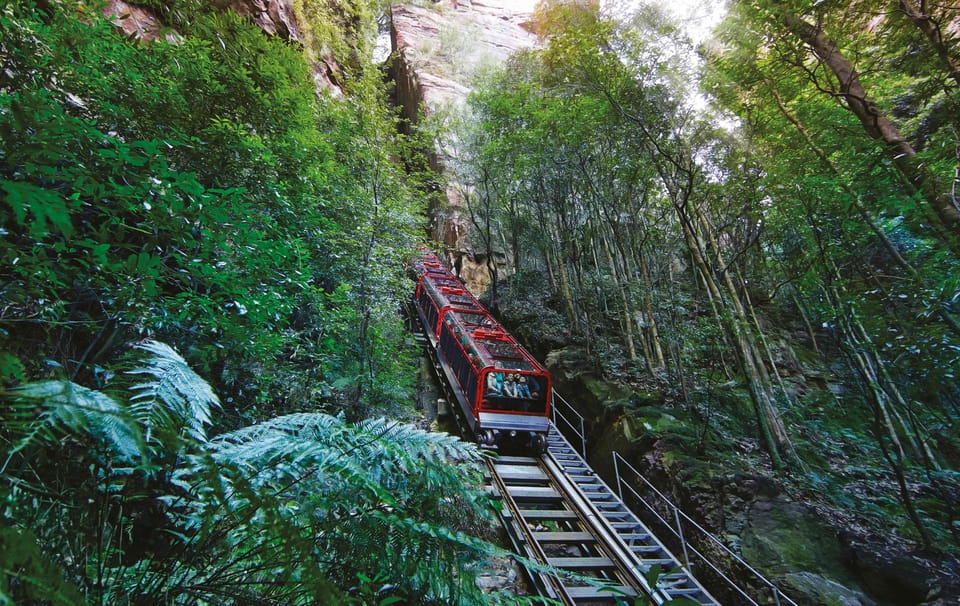
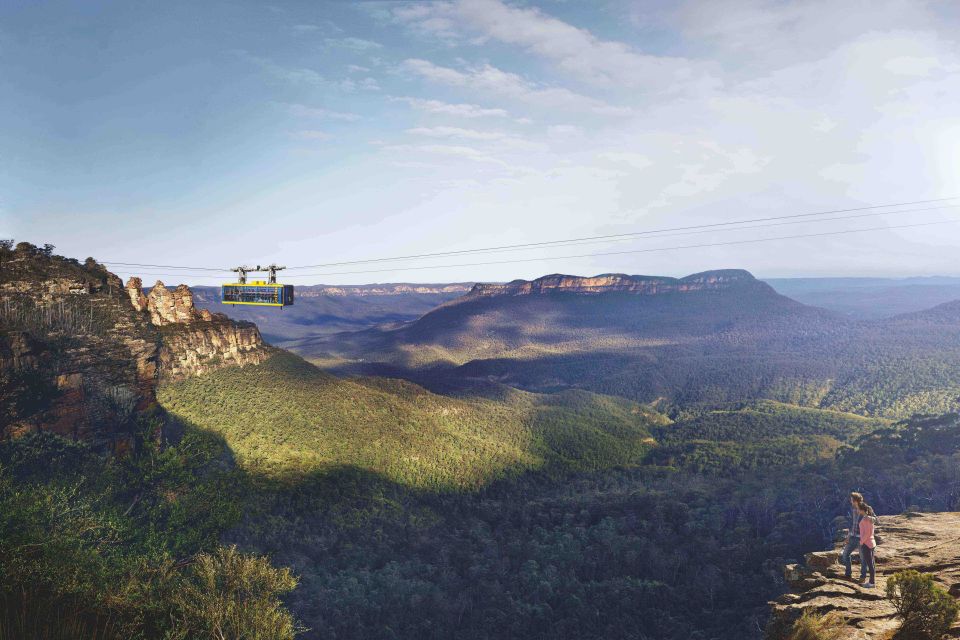
June strips the tour buses out of the Blue Mountains. What remains is silence, cracked by kookaburras and the drip of moisture through sandstone. Cold air thickens the eucalyptus oil haze that names these peaks. Stand at Echo Point or Govetts Leap. The Jamison Valley becomes a blue-grey ocean of canopy. Temperatures at 900 metres (2,953 ft) hover between 3 and 11 degrees Celsius (37 to 52 degrees Fahrenheit). Layer up. The Grand Canyon Track near Blackheath dives through mossy overhangs and fern gullies. Down there the air drops ten degrees. It smells of wet stone and leaf litter. The National Pass at Wentworth Falls hugs a cliff behind a waterfall. In June the falls run hard enough to soak the track. Start walks by 8 AM. Maximise daylight. The Three Sisters lookout, packed at midday, stands empty at sunrise. Better light anyway. Trains leave Sydney Central for Katoomba every hour. The ride takes two hours through bushland that grows steeper by the minute.
Booking Tip: Guided bushwalking tours leave Sydney at dawn and return after dark. They usually tackle the Grand Canyon or National Pass tracks. Going solo is easy. Download trail maps from the national parks service before you set out. If you choose a guided group, book a few days ahead. Confirm transport from Katoomba station if you arrive by train. Current guided options are listed in the booking section below.
Barossa Valley and Adelaide Hills Wine Touring
South Australia's wine regions were made for winter, and June is when locals reclaim them from summer's coach-tour circus. The Barossa Valley in June is quiet, cool, and smells like wood smoke drifting from cellar-door fireplaces. Shiraz tastings at the old-guard estates, some with vines planted in the 1840s and never grafted, hit differently when you stand in a stone-walled tasting room with rain streaking the windows and a cheese board sourced from the Adelaide Hills dairy next door. The valley floor sits at roughly 275 metres (902 ft) elevation and June days average around 14 degrees Celsius (57 degrees Fahrenheit), cold enough for a jacket but not so cold that you cannot walk between cellar doors on the Seppeltsfield Road stretch where they line up within a kilometre of each other. The Adelaide Hills, twenty minutes further into the ranges, are colder and mistier, and the cool-climate pinot noir and chardonnay producers there reward the extra layer. Most cellar doors in June operate without the booking restrictions that summer demands, which means you can wander in unannounced, talk to the actual winemaker instead of a weekend-hire pourer, and taste without the production-line pace of peak season.
Booking Tip: Small-group wine tours from Adelaide cover the Barossa, Adelaide Hills, or McLaren Vale and typically include four to six cellar-door stops plus lunch. Book a week ahead for weekend departures. Midweek tours often have last-minute availability. Self-driving is straightforward if you have a designated non-drinker, and the valley is only an hour from Adelaide's CBD. See current wine-tour options in the booking widget below.
Margaret River Coastal and Wildlife Encounters
Western Australia's Margaret River region in June is a study in moody coastal beauty that the summer surf crowd never sees. The Indian Ocean swells build through winter and hammer the limestone headlands between Cape Naturaliste and Cape Leeuwin with a ferocity that makes the lookout platforms at Canal Rocks vibrate underfoot. The spray reaches you before you reach the rail, and the sound is a deep, chest-level thud that rolls across the karri forest behind the coast. Water temperatures drop to around 18 degrees Celsius (64 degrees Fahrenheit), which thins the surf lineups at spots like Surfers Point to the committed wetsuit-and-booties crew. Inland, the caves along Caves Road, Jewel Cave and Lake Cave, maintain a constant 17 degrees Celsius (63 degrees Fahrenheit) year-round and offer a useful retreat on rainy afternoons. The kangaroo and bird activity around Boranup Forest peaks in the cooler months when animals are more active during daylight hours, and the forest floor is covered in a carpet of fallen marri blossom that smells faintly sweet and fermenting. The region's food producers, dairy farms, chocolate makers, olive groves, run quieter winter schedules that allow for longer conversations and tasting sessions without the December queue.
Booking Tip: Full-day tours from Busselton or Dunsborough cover the coast, caves, and food producers in a single loop. Book at least a week ahead as the better small-group operators cap at eight to ten passengers. Self-driving is ideal if you want to linger, and the main attractions sit within a forty-minute radius of Margaret River township. Browse current tour options in the booking section below.
Where to Stay in Australia in June
Hand-picked hotels across price tiers for June travellers.
Public Holidays in June
Dates that affect opening hours, transport and crowds
Western Australia Day
A public holiday in these regions only: AU-WA.
King's Birthday
A public holiday in these regions only: AU-ACT, AU-NSW, AU-NT, AU-SA, AU-TAS, AU-VIC.
Western Australia Day
A public holiday in these regions only: AU-WA.
King's Birthday
A public holiday in these regions only: AU-ACT, AU-NSW, AU-NT, AU-SA, AU-TAS, AU-VIC.
Packing Checklist
Bookmark this page — your progress is saved between visits
Need the full list with shopping links?
Climate-specific gear, brand recommendations, and what to leave at home.
View Australia Packing List →Essential Tips
Insider knowledge and common pitfalls to avoid
Insider Knowledge
Australia is a continent pretending to be a country, and June exposes the error of treating it as one climate zone. The smart play is to split the trip. Start in the tropical north where June is dry season perfection, warm days, cool nights, zero humidity. Fly south for urban festivals and winter wine regions. Cairns to Sydney is a three hour flight, about the same as London to Istanbul, and the temperature and landscape shift is just as dramatic. Do not attempt to drive it unless you have three weeks.
Melbourne coffee culture is not hype. It is a genuine subculture that runs deeper than most cities food scenes. Laneways around Degraves Street, Centre Place, and Hardware Lane hide roasters and cafes that have been refining single origin pour overs since before specialty coffee had a name. In June, a flat white in a laneway cafe while rain drums the corrugated awning above you is one of Melbourne's defining winter moments. Order a flat white, not a latte. Do not ask for drip coffee unless you want the barista to silently judge you.
Rental car insurance in Australia hides a trap that snares international visitors. Most standard policies exclude damage on unsealed roads. The instant you turn off the bitumen onto a red dirt track in the Northern Territory or Western Australia, your coverage vanishes. If your plans include Kakadu's Jim Jim Falls track, the Gibb River Road, or any Kimberley four wheel drive routes, confirm that your rental agreement and insurance explicitly cover unsealed surfaces and single vehicle rollovers. This is not an upsell. It is the difference between a flat tyre being a nuisance and a cracked windscreen costing several thousand dollars.
Supermarket wine in Australia is legitimately good, and that is no consolation prize. Bottle shops attached to Woolworths and Coles stock regional wines from the Barossa, McLaren Vale, Margaret River, and the Hunter Valley that compete with what cellar doors charge far more for. June is also when many producers release new vintages, so shelves refresh with fresh stock. Visit wine regions, taste at cellar doors to find what you like, then buy your take home bottles at the town bottle shop for a fraction of tasting room retail.
Avoid These Mistakes
Do not pack for summer just because it is Australia. June is winter in the southern hemisphere, full stop. Melbourne June mornings can fall to 6 degrees Celsius (43 degrees Fahrenheit) with wind chill off the bay, and Hobart is colder still. Visitors who arrive with shorts and thongs expecting year round warmth spend day one buying emergency jackets at inflated CBD prices. Check the latitude. Melbourne sits about as far from the equator as Madrid or San Francisco, and in June it acts the part.
Forget the grand loop. Australia punishes hubris. Sydney to Cairns is 2,400 km (1,491 miles). Sydney to Perth is 3,900 km (2,423 miles). Each domestic hop chews two to five hours and funnels you back through Sydney or Melbourne. Two weeks? Choose two regions. Three only if you enjoy terminal coffee. Depth beats breadth here more than anywhere.
Ignore the Territory at your loss. Darwin and Kakadu in June serve wildlife, stone country, and Indigenous culture at their continent-wide peak. Dry air, blue skies, thin crowds. Most visitors cling to the Sydney-Melbourne-Cairns triangle and miss the landscape that feels most alien and most Australian.
Ready to plan your trip to Australia?
Now that you've got the research covered, here's where to go next.
Book Experiences in Australia
Top-rated things to do in Australia this June



Explore More Activities in Australia
Didn't see anything interesting yet?
Browse Viator's full catalog of tours, day trips, food experiences, and private guides in Australia.
See All Australia Tours on Viator